
For decades, construction procurement ran on a simple rule: you give out the lowest bid and the project is yours. While that standard still works for some companies, many companies are now changing their priorities when it comes to selecting the winner of the construction bid.
On more complex jobs, the cheapest number can become the most expensive choice if it leads to weak coordination, thin supervision, avoidable change orders, or staffing gaps that slow the project down. The Federal Highway Administration says traditional design-bid-build has generally treated cost as the deciding factor, but it also warns that low bids can lead to lower quality, contract changes, delays, and overruns when the price does not match the work.
The price of the bid still matters, but owners are increasingly asking something more practical: which contractor is most likely to deliver the project without turning the job into a budget fight, a staffing scramble, or a schedule recovery exercise? In these situations, credibility often matters more than the price tag.
FHWA’s current guidance on innovative delivery methods frames the market this way: the goal is moving from chasing the lowest bid to achieving better outcomes, faster delivery, and stronger long-term value.
Table of Contents
The Lowest Bid Still Matters, But It No Longer Tells the Whole Story
The low-bid model came from a procurement culture built around fairness, comparability, and price discipline. If several qualified firms can perform the work, the owner shouldn’t pay more than necessary. Many people in the industry still agree with this, especially on straightforward projects with a stable scope, familiar trades, and limited coordination risk. FHWA still describes cost as the traditional deciding criterion in design-bid-build.
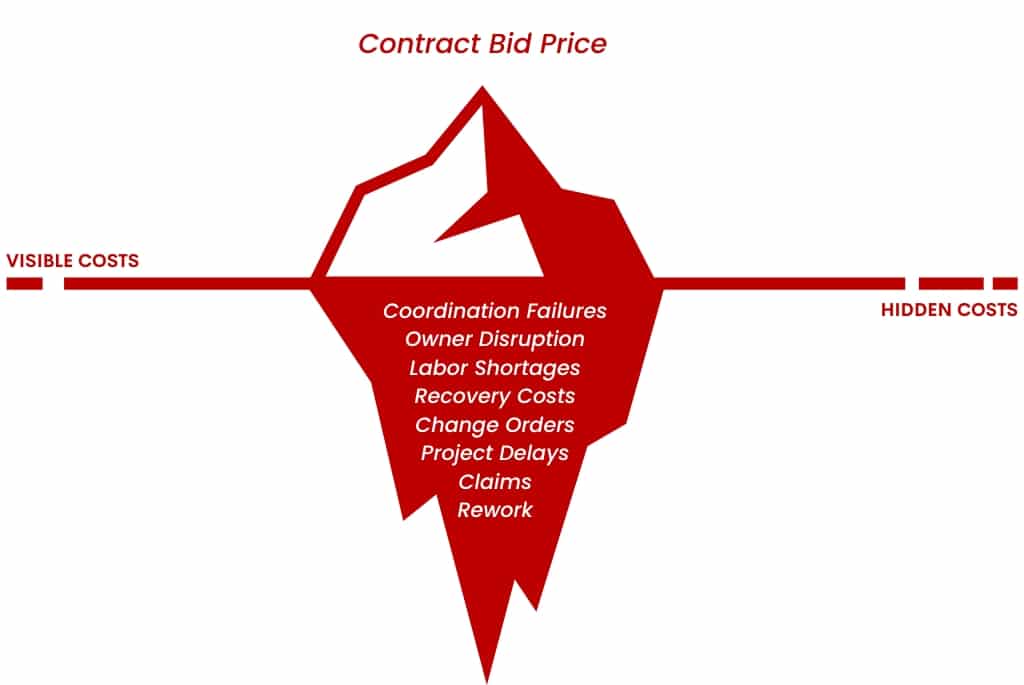
The problem is that the number on bid day does not always reflect the cost of delivering the project cleanly. A low price can reflect genuine efficiency. It can also reflect optimistic labor assumptions, weak subcontractor coverage, an incomplete read on the drawings, or a strategy to recover margin later through claims and changes.
That’s why low-bid logic breaks down fastest on complicated work. The bid tab may show one firm as cheaper, but the field conditions may later show that the number was never realistic in the first place. FHWA explicitly identifies this risk when it notes that some contractors bid too low, then struggle with quality, contract changes, delays, and overruns.
Owners are now becoming more skeptical of a low number that’s unsupported by a believable delivery plan. Price still matters, but credibility matters more than it used to. FHWA’s broader “Beyond Bid-Build” push makes the same point by emphasizing best outcomes rather than the cheapest starting number alone.
Why Owners Sometimes Choose the Higher Construction Bid
When owners choose a higher-priced contractor, they’re buying a lower probability of downstream failure. What owners are really evaluating is whether the contractor’s price is backed by enough planning, enough staffing, enough field leadership, and enough control to keep the project from drifting into avoidable cost growth. FHWA’s alternative contracting guidance supports that logic by pointing agencies toward delivery methods that reduce unforeseen delays and cost overruns rather than focusing on initial price alone.
Change Order Risks
One reason higher bids win is change-order risk. Owners know that an aggressive bidder can appear economical at award and become expensive during execution if the business model depends on recovering margin through disputed scope, field-driven pricing, or incomplete coordination.
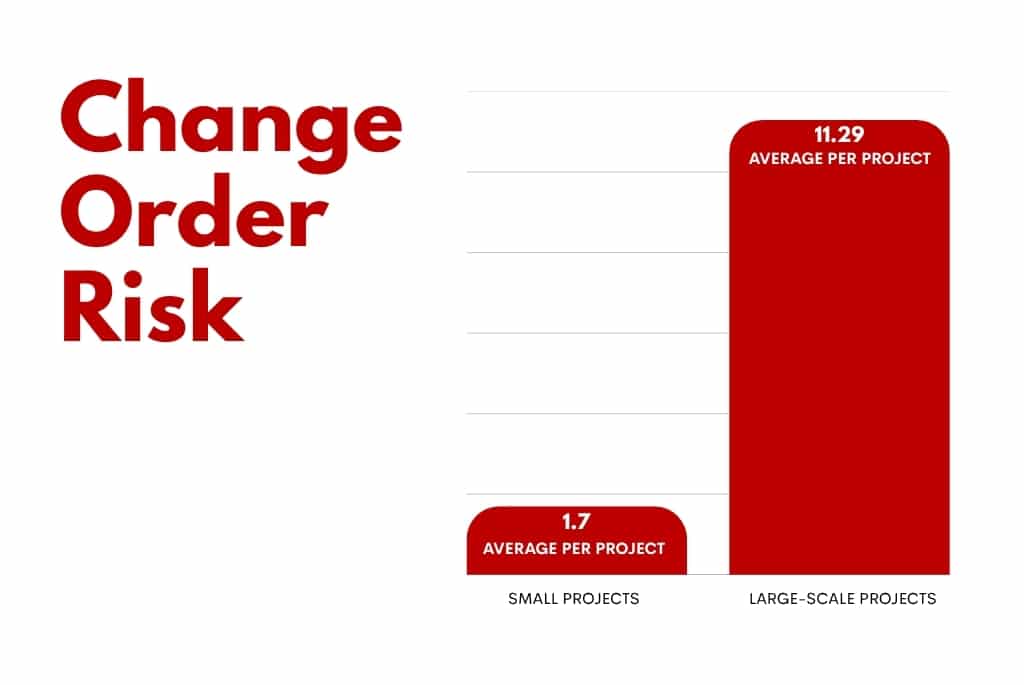
The AIA-backed research note The Truth About Change Orders says its analysis used natural language processing on 892,457 change orders and built an analytic dataset of 18,229 completed projects over the last ten years. The average change orders per project ranged from 1.7 on small projects to an average of 11.29 on large scale projects. At that scale, change orders are not unusual exceptions, they’re a structural part of project economics, which is exactly why owners pay attention to which bidders seem more likely to generate them.
Predictable Schedules
A higher bid can also win because the owner believes that the contractor is more likely to protect the schedule. In a labor-constrained market, protecting the schedule can prove to be a difficult task.
The Associated General Contractors’ 2024 workforce survey found that 54% of firms reported project delays due to shortages in their own or subcontractors’ workforces, and 80% had at least one project canceled, postponed, or scaled back because of workforce shortages. Once labor scarcity reaches that level, owners stop treating staffing as a background HR issue and start treating it as a delivery risk.
Quality of Work & Technical Capability
Work quality and technical capability are another reason pricing doesn’t win the award by itself. Some projects require more than competent general execution. They require strong trade coordination, phasing in occupied facilities, compliance with tight safety or regulatory demands, specialized technical knowledge, or an unusually disciplined project team.
FHWA’s design-build guidance says best-value procurement can consider qualifications, experience, technical approach, project management, quality control, and innovation. Once those factors enter the evaluation, a higher bid can be the rational choice because the owner is buying a way to get through a difficult project with fewer surprises.
Financial Protection
Financial protection matters too. Surety, bonds, and warranties influence owner behavior because they reduce downside exposure if the job goes sideways. The Small Business Administration says surety bonds help provide the customer with a guarantee that the work will be completed, and notes that bid, performance, and payment bonds are commonly required on public and private work. That kind of backing changes how owners judge risk. A lower price without meaningful protection may not be as attractive as a slightly higher price backed by stronger assurances.
Why Cost Alone No Longer Determines Who Wins the Bid
More owners now have formal procurement methods that let them weigh the value of a company beyond raw price. FHWA’s current materials on innovative delivery make this explicit: the aim is to help agencies achieve outcomes that are better, faster, and smarter, while still protecting quality and accountability. That means the award decision can incorporate schedule, technical fit, risk allocation, and delivery capability alongside cost.
FHWA’s “Beyond Bid-Build” points out the improved outcomes that have resulted from this change in thinking: Oregon and Colorado use best value to include technical skills and schedule in awarding contracts. They report that New York found best-value projects finished 2.9 months sooner on average than similar low-bid projects. That’s the practical reason cost no longer decides everything by itself. Owners increasingly treat time, disruption, and execution reliability as project costs too. A lower award amount means less if the job drags on longer or becomes harder to control.
Delivery models have changed the market as well. The 2025 FMI design-build utilization study says design-build is projected to account for more than 47% of U.S. construction spending by 2028. This forecast shows that more spending is moving into project structures where qualifications, technical approach, integration, and speed have more room to influence the award. That doesn’t mean low bids will disappear, but it does mean a growing share of the market is no longer attracted by low cost bids alone.
Put simply, price still matters, but it’s increasingly being judged inside a broader idea of value. The cheapest outcome isn’t always the cheapest initial bid.
Why Contractors Proactively Find Talent for Upcoming Bids
Labor Shortages
Labor shortages are one reason contractors line up talent before the award. They recruit early because labor scarcity makes the proposed team part of the offer itself. The AGC 2024 workforce survey shows how severe the pressure is: 94% of firms had openings for craft workers, 85% had openings for salaried workers, 83% struggled to hire superintendents, 81% struggled to hire project managers or supervisors, and 78% struggled to hire estimators. These are significant roles that have the ability to make or break a project. Proactively finding talent to fill these roles makes companies much more confident in the bid you’re presenting.
Personnel Required for Bid Submission
Some bids even make you define the team early by requiring key personnel, named subcontractors, consultants, or organizational charts in the submission. The GSA’s current SF330 states that named subcontractors, outside associates, and consultants must be used, and any change must be approved by the contracting officer. That’s a concrete example of how team composition can become part of the evaluated proposal, not a staffing problem to sort out later.
Requirements like GSA’s SF330 change contractor behavior. Firms pursue superintendents, project managers, safety leaders, estimators, discipline specialists, and critical trade partners before the award because a bid may need those names, resumes, or relationships in place to be persuasive. Owners are now assessing whether the proposed team looks real, available, and capable.
More Competitive Positioning
Pre-bid recruiting is part of competitive positioning. A contractor that can show the right people early is often presenting a stronger, lower-risk offer than a contractor that only has a low cost. That’s especially true when the owner is trying to judge which firm can start cleanly and maintain momentum once the job begins.
What Owners & Contractors Are Really Evaluating When They Compare Bids
When owners compare bids, they’re weighing change-order exposure, schedule confidence, the quality of project leadership, coverage of specialized scopes, and the financial protections attached to the work.
Change Order Handling
The Volpe Center’s 2025 report on construction change orders says better understanding of change orders can improve project delivery outcomes, and it ties change orders to broader project-delivery challenges rather than treating them as isolated paperwork events. That is one reason owners look for contractors whose bids seem more stable and realistic from the start.
Process & Quality Standards
They are also judging whether the contractor can hold quality without constant correction. In practice, that means looking at supervision, process discipline, and whether the firm has enough depth to manage the project without improvising its way through critical phases. The cheaper contractor may still win if that capability is clear but the “lowest bid” is no longer reliable shorthand for “best choice.” Owners are increasingly trying to estimate the likelihood of friction after the award, not just the number written on the front page.
What This Means for Construction Firms Trying to Win More Bids
Firms can’t rely on price alone to win bids, especially on projects with labor pressure, technical complexity, heavy owner scrutiny, or thin schedule tolerance. They need to show why their number is dependable. That means building proposals around proof rather than vague claims: credible staffing, experienced leadership, a believable technical approach, clear QA and QC discipline, specialized expertise where the job demands it, and financial protections that reduce owner anxiety. Best-value environments reward that directly, but even more traditional procurements are influenced by it because owners have become more aware of what a cheap award can cost later.
This also means recruiting and workforce planning belong inside the preconstruction strategy. When the proposed team affects whether the bid looks credible and when key roles are hard to fill, talent becomes part of the bid itself.
Contractors that secure critical people early can pursue more work with confidence, submit stronger offers, and reduce the chance of winning a job they cannot staff properly. In the current market, that’s a competitive edge.
Conclusion
The lowest construction bid still wins some jobs, and price will never stop mattering. However, the market has become less willing to treat the cheapest number as the safest answer by default. Owners have seen what underpricing can produce: change orders, delays, weak coordination, staffing gaps, and preventable risk.
At the same time, best-value procurement and alternative delivery have given them more room to evaluate what they are really buying. The result is a different kind of competition. Contractors are no longer judged only on how low they can go; they’re judged on how confidently they can deliver.
Have a bid submission that you need to staff? Get in touch with us to start searching for your next team!
Frequently Asked Questions
Why would an owner choose a higher construction bid?
Because the higher bid may offer lower execution risk. Owners often pay more when they believe a contractor is less likely to trigger change orders, delays, weak supervision, quality problems, or staffing failures that drive total project cost up later.
Does the lowest construction bid still win public projects?
Yes, in many cases. Traditional design-bid-build still uses price heavily, but agencies increasingly use delivery methods and evaluation structures that let them consider schedule, technical skill, and broader project outcomes alongside price.
Why do contractors recruit before they win the bid?
Because labor shortages are severe and because some bids require key personnel, named subcontractors, consultants, or team structures to be identified in the proposal itself. Early recruiting strengthens the credibility of the bid.
How do change orders affect bid selection?
Owners know that underpriced or poorly coordinated work can lead to more changes during construction, which can increase cost and extend the schedule. That makes change-order risk part of the award decision even when it is not spelled out on the score sheet.
What does best value mean in construction procurement?
It means the owner is evaluating more than the lowest starting price. Depending on the delivery method, that can include technical approach, qualifications, schedule, innovation, and the likelihood of a smoother project outcome.